

Our Company
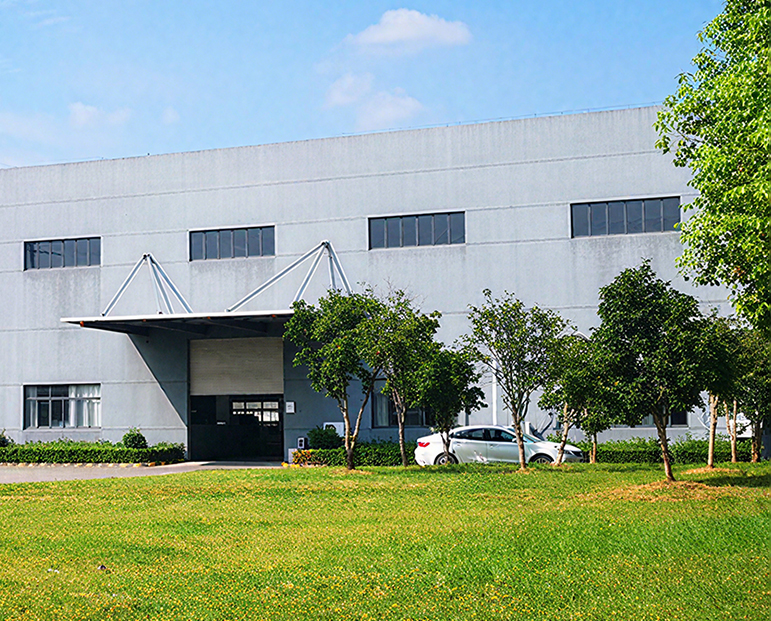
A Mature Factory
You Can Count On

Suzhou Four-Leafed Clover Packaging New Materials Co., Ltd. (formerly Suzhou Dongzi Color Printing Technology Co., Ltd.), founded in January 2016, is a technology-based manufacturing enterprise specializing in the research, development, production, and sales of packaging for products in the food, daily chemical, electronics, and health product industries. Packaging types include various plastic bags, automatic packaging rolls, paper bags, cartons, thermoformed packaging, and environmentally friendly packaging materials. The company's parent company is Suzhou Dongguan Packaging Co., Ltd., which was listed on the National Equities Exchange and Quotations (NEEQ) on August 3, 2016.

View More
Product Categories
What We Offer
We focus on providing intelligent and sustainable packaging solutions to help enhance product value and upgrade brand image.
Plastic flexible packaging bag film

Overview of Plastic Flexible Packaging Bag Film

Plastic flexible packaging bag film refers to a broad range of packaging materials designed for containing, preserving, and transporting products. These films are often made from various types of plastic materials such as polyethylene, polypropylene, and polyester, offering flexibility, durability, and ease of use. The key feature of this category is its lightweight nature and its ability to provide an effective protective barrier for various goods.

Types of Films Included

This category includes a wide array of packaging films tailored for specific needs. These films are not only designed for general use but are also available in specialized forms to meet unique packaging requirements. They cater to industries such as food, medicine, and consumer goods, ensuring both safety and functionality.

Characteristics of Plastic Flexible Packaging Films

Plastic flexible packaging films are characterized by their ability to be easily molded, sealed, and adjusted according to the size and shape of the product. These films typically provide excellent protection against moisture, dirt, and damage during handling and shipping. They are also customizable, allowing for printing and branding to enhance the appeal of the packaged product.

Applications in Various Industries

This category serves diverse industries, including food packaging (such as snack bags, frozen food bags), pharmaceutical products (blister packs, sachets), and household items (cleaning products, personal care). The versatility of plastic flexible packaging makes it an essential element in daily commerce and logistics.

Paper Packaging
Paper Packaging

Paper packaging is a sustainable and versatile packaging solution widely used across various industries. It offers an environmentally friendly alternative to plastic, as it is biodegradable, recyclable, and made from renewable resources. As consumer preferences shift towards eco-conscious choices, paper packaging has become increasingly popular for both its practicality and its minimal environmental impact.

This type of packaging is ideal for a variety of products, from food and beverages to electronics and retail goods. It is easily customizable with designs, prints, and finishes, making it a preferred option for businesses looking to enhance their branding while promoting sustainability. Paper packaging also provides excellent protection for products during transportation and storage, offering a reliable option for both small and large items.

Within the paper packaging category, there are several specialized solutions, such as kraft paper bags, paper gift boxes, paper carrying bags, and corrugated boxes. These products serve a wide range of purposes, from retail packaging to shipping, all while supporting eco-friendly practices. Paper packaging continues to evolve, providing innovative and responsible alternatives to traditional packaging materials.

Environmentally Friendly Packaging

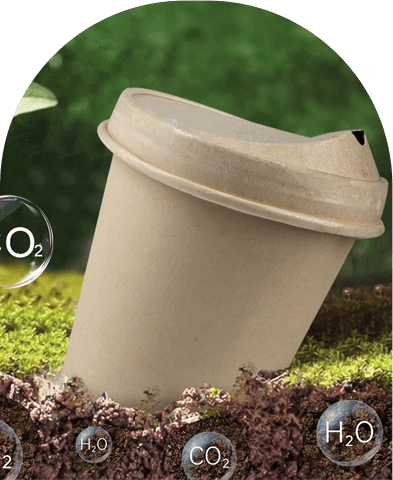
Environmentally friendly packaging refers to packaging solutions designed with sustainability in mind, focusing on reducing environmental impact through the use of renewable, recyclable, or biodegradable materials. As concerns over waste and pollution grow, businesses are increasingly adopting packaging options that minimize harm to the environment. These eco-conscious packaging alternatives aim to reduce landfill waste, decrease carbon footprints, and promote a circular economy by ensuring that materials can be repurposed or safely decompose. Whether through the use of biodegradable films or recyclable materials, environmentally friendly packaging supports a shift towards more responsible consumption and production practices. This approach not only aligns with global sustainability goals but also meets the growing consumer demand for environmentally conscious products and packaging.

Advantages
Why Choose Us

We combine advanced R&D and manufacturing capabilities with eco-friendly materials and a strict quality management system to ensure safe and reliable products. We offer efficient delivery and flexible customization to serve industries such as food, personal care, electronics, and pharmaceuticals, helping clients enhance competitiveness and brand value.

  • Quality 1

    We follow ISO9001 standards to ensure safe, consistent, and reliable products trusted by leading brands.

    Suzhou Four-Leafed Clover Packaging New Materials Co., Ltd.
  • Innovation 2

    We develop eco-friendly materials, offering biodegradable and recyclable packaging for sustainability.

    Suzhou Four-Leafed Clover Packaging New Materials Co., Ltd.
  • Delivery 3

    We have built a mature and robust production and supply chain system to ensure rapid response and on-time delivery.

    Suzhou Four-Leafed Clover Packaging New Materials Co., Ltd.
  • Custom 4

    We offer tailored packaging solutions across industries, enhancing brand image and competitiveness.

Partners
Our Partner Companies
History & Honors
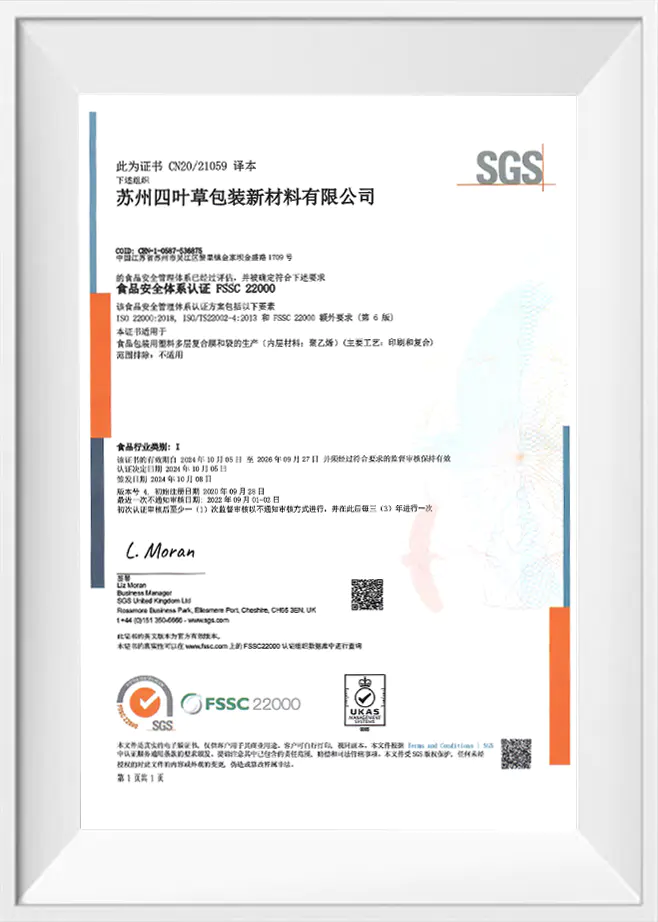
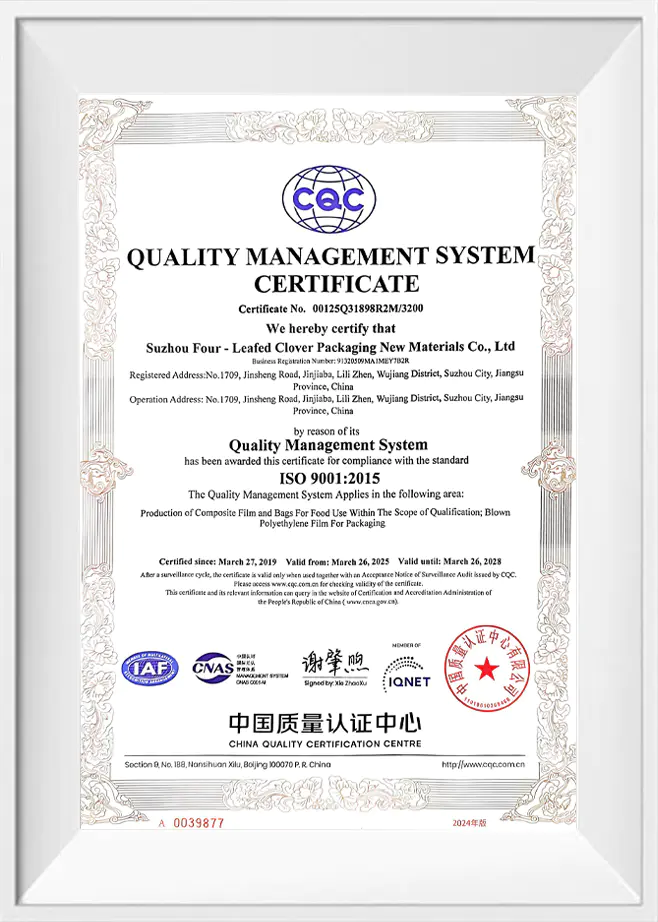
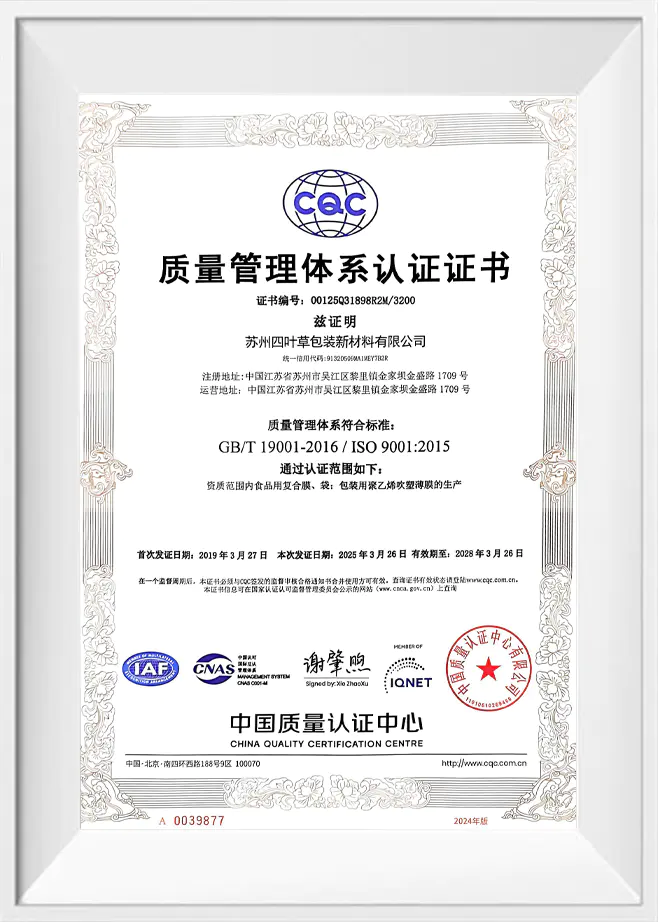
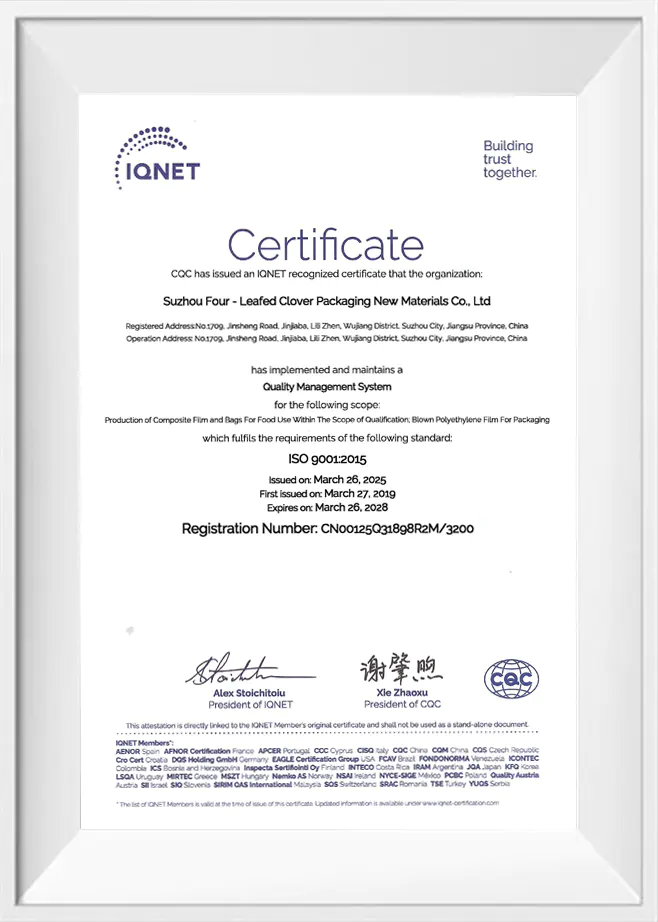
Our Certifications
Professional scale factory production. We can customize finished products wholesale and export, OEM production, and distribution. I just wanted to let you know that welcome to inquire and place orders.
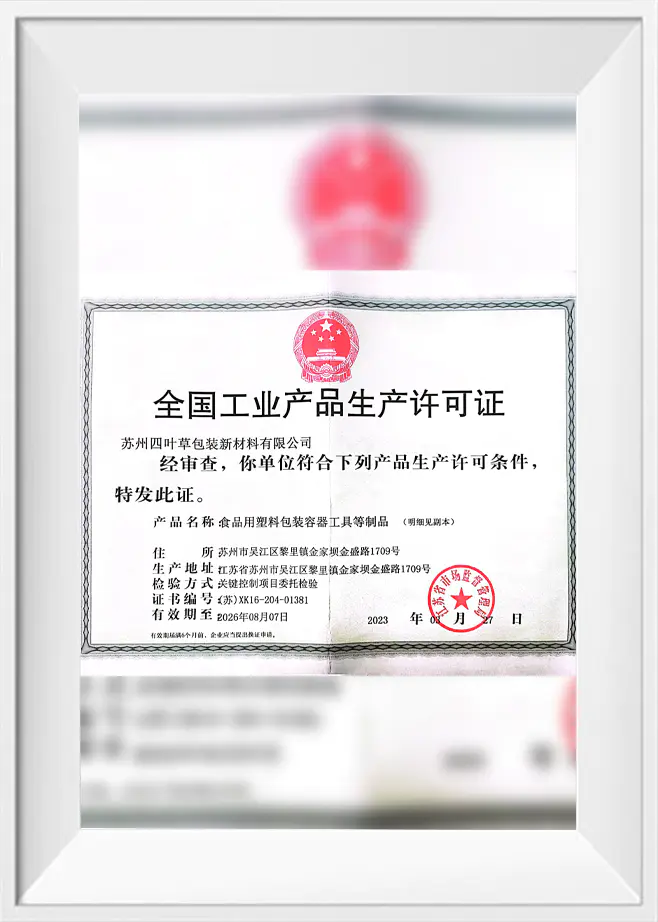
Food Safety Management System Certification PSSC 22000 Quality Management System Certificate Quality Management System Certification Certificate Certificate National Industrial Product Production License
2016

Suzhou Four-Leafed Clover Packaging New Materials Co., Ltd. was established, focusing on the research and development, and production of plastic and paper packaging bags and other products. Its parent company, Suzhou Dongguan Packaging Co., Ltd., successfully listed on the National Equities Exchange and Quotations (NEEQ) in August of the same year.

2017

By introducing the ISO9001 quality management system, we can improve product quality management and attract mid-to-high-end technical and management talent.

2018

We have established partnerships with globally renowned brands such as "Totole", "Plum Blossom", and SANOVO EGG GROUP to expand our market share.

2019

Increase investment in technological research and development, improve production efficiency and product innovation, and meet increasingly fierce market demands.

2020

We focus on environmentally friendly packaging materials to promote sustainable development and further improve productivity and product quality.

2021

Consolidate our industry position, expand our domestic and international customer base, and provide customized packaging solutions.

Blogs
Recent News
Luohe Industrial Electronic Shielding Bag Manufacturer Luohe Industrial Electronic Shielding Bag Manufacturer

Suzhou Four-Leafed Clover Packaging New Materials Co., Ltd., founded in January 2016, is a high-tech enterprise specializing in the research and development of pharmaceutical packaging color printing technology; packaging and decoration printing; and the research, development, production, and sales of food and pharmaceutical composite bags (thickness not less than 0.025 mm). The company's first-phase investment was 13.8 million yuan, and the current factory covers an area of ​​15,000 square meters. The company currently possesses one blown film machine, one 10-color printing machine, one dry laminating machine, one Italian-imported Nordmex solvent-free laminating machine, one Lingyun inspection machine, five bag making machines, and one Kesheng high-speed slitting machine. This professional and advanced equipment significantly improves the company's production capacity and product quality.


These advantages have led to the widespread application of aluminum foil composite materials in packaging bags for meal replacement biscuits and baked goods. In addition to the above advantages, aluminum foil composite materials also have excellent high-temperature resistance, allowing them to maintain good performance even in high-temperature environments, meeting the packaging needs of meal replacement biscuits and other baked goods.


The thickness of vacuum packaging bags is also a factor we need to consider. Generally, thicker vacuum packaging bags can better protect goods and extend their shelf life. However, thicker vacuum packaging bags also mean higher costs and greater weight. Therefore, when choosing, we need to weigh the thickness factor based on our actual needs.

Extrusion-coated composite film: On an extruder, thermoplastic plastic is cast through a T-die onto the paper, foil, or plastic substrate to be laminated, or the extruded resin is used as an intermediate binder. While still hot, another film substrate is pressed together to form a "sandwich" type composite film. To improve the lamination strength, corona treatment and an anchoring agent are required.

The company's main clients currently include global chicken essence brand "Totole," MSG industry giant "Meihua," and "Oufu," a member company of the global egg product group SANOVO EGG GROUP in China. It also maintains cooperative relationships with many well-known domestic pharmaceutical companies. Faced with an increasingly competitive flexible packaging market, the company has adopted the advanced ISO9001 quality management model. By introducing mid-level and technical personnel and managers, it continuously increases its technological innovation efforts and development level, and strengthens product quality management. The company is committed to wholeheartedly serving its customers and using stringent standards to produce high-quality flexible packaging!

Some packaging materials include desiccants or oxygen absorbers to extend shelf life. They also include gas barrier properties such as gas permeability; oil resistance, heat resistance, cold resistance, and media resistance; bag sealing peel force, bag pressure resistance, and drop resistance. These indicators reflect the reliability of food packaging bags in protecting the inner contents.

Food packaging bags come in many types. Based on different uses and characteristics, they can be divided into the following categories: 1. Vacuum packaging bags are usually made of materials such as polyethylene (PE), polypropylene, nylon, and polyester, and have excellent transparency and water resistance. 2. High-temperature retort pouches: High-temperature retort pouches are food packaging bags that can withstand high-temperature cooking. They can be used for cooking, baking, and heating food.

Equipment Configuration

Three-layer co-extrusion blown film machine: Taiwan-made die with a maximum effective width of 2 meters, annual output of over 2000 tons.

Printing machine: Professionally prints on plastic films, paper, and other roll materials.

Dry laminating machine: Professionally laminates plastic materials, paper, aluminum foil, and other roll materials.

Solvent-free laminating machine: Professionally laminates various flexible packaging substrates.

Slitting machine: High speed up to 450m/min, slitting width 1300mm.

Bag making machine: Can produce three-side seal bags, stand-up zipper bags, and other bag types.

Professional laboratory testing equipment: Gas chromatograph, tensile testing machine, coefficient of friction tester, heat sealer, oxygen transmission rate tester, etc.

Company Vision: To enable every reliable employee to receive satisfactory compensation, improve their work skills, gain respect from others, and fulfill their family responsibilities.

The inspection items for food packaging composite film bags are mainly divided into the following categories: The appearance should be flat, free from scratches, burns, bubbles, oil breaks, and wrinkles; the heat seal should be flat and without any gaps. Therefore, there are also corresponding hygiene standards for the finished products. The purpose is to prevent the misuse and abuse of additives and to better ensure that the materials directly packaging and contacting food have high hygiene and safety performance.

For example, they can improve the brand image and added value of products. In addition, multi-layer composite packaging bags also have good reusability. Some high-quality packaging bags can even be used multiple times, reducing waste. Multi-layer composite packaging bags play an increasingly important role in modern society. Only in this way can we enjoy the convenience and benefits brought by multi-layer composite packaging bags.

Suzhou Four-Leafed Clover Packaging New Materials Co., Ltd., a manufacturer of flexible packaging bags, specializes in: food packaging bags, composite packaging bags (films), electronic packaging bags, aluminum foil packaging bags, single-structure packaging bags, BOPE packaging bags, printed packaging bags, pharmaceutical composite bags, and other packaging bags (films). Customization is available upon request. Please call 13962531155 for inquiries.

View More
Jun 12, 2024
Jinhua pharmaceutical packaging film prices are trustworthy Jinhua pharmaceutical packaging film prices are trustworthy

Suzhou Four-Leafed Clover Packaging New Materials Co., Ltd., founded in January 2016, is a high-tech enterprise specializing in the research and development of pharmaceutical packaging color printing technology; packaging and decoration printing; and the research, development, production, and sales of food and pharmaceutical composite bags (thickness not less than 0.025 mm). The company's first-phase investment was 13.8 million yuan, and the current factory covers an area of ​​15,000 square meters. It currently possesses one blown film machine, one 10-color printing machine, one dry laminating machine, one Italian-imported Nordmex solvent-free laminating machine, one Lingyun inspection machine, five bag making machines, and one Kesheng high-speed slitting machine. This professional and advanced equipment significantly enhances the company's production capacity and product quality.

Single or multi-layer polymer melt is processed in an extruder and applied to a substrate through a specialized die. Since coated LDPE does not contain oxidants or slip agents, using coated LDPE as a heat-sealing layer results in better compatibility with pharmaceuticals, exhibiting less migration and adsorption compared to other materials, making it more suitable for pharmaceutical packaging.

II. Aluminum foil composite materials have excellent printability. The smooth, flat surface of aluminum foil facilitates various printing processes, such as gravure printing and screen printing. This allows meal replacement biscuit packaging bags to display rich and varied patterns, text, and colors, attracting consumer attention and enhancing the product's brand image and market competitiveness.

2. Excellent sealing performance; 3. Excellent tensile strength. Three-side seal aluminum foil composite packaging bags possess excellent tensile strength, effectively withstanding friction and impact during packaging and transportation, preventing packaging damage and product leakage. Their attractive appearance enhances the overall image and grade of the product, attracting consumers and increasing sales.

The company's main clients currently include global chicken essence leader "Totole," MSG giant "Meihua," and "Oufu," a member company of the global egg products group SANOVO EGG GROUP in China. It also maintains cooperative relationships with several well-known domestic pharmaceutical companies. Facing the increasingly competitive flexible packaging market, the company has adopted the advanced ISO9001 quality management model, continuously increasing technological innovation and development efforts by introducing mid-level technical and management personnel, and strengthening product quality management. The company is committed to wholeheartedly serving its customers and using stringent standards to produce high-quality flexible packaging!

Extruded coated composite film: On an extruder, thermoplastic plastic is cast through a T-die onto the paper, foil, or plastic substrate to be laminated, or the extruded resin is used as an intermediate binder. While still hot, another film substrate is pressed together to form a "sandwich" type composite film. To improve lamination strength, corona treatment and an anchoring agent are required.

The inspection items for single-layer food packaging bags mainly fall into the following categories: Specifications, width, length, and thickness deviations should all be within specified ranges. Some packaging film bags, due to packaging processes, machinery, or the needs of the contents, also require antistatic, anti-condensation, and high-slip properties, so antistatic agents, anti-fogging agents, lubricants, and opening agents are added.

In addition, flexibility, workability, adhesion durability, resistance to media corrosion, and hygiene are also crucial factors. Therefore, adhesives must be able to resist the corrosion of these substances and maintain sufficient bond-peel strength. Plastic film lamination processes include dry lamination, wet lamination, extrusion lamination, hot melt lamination, and co-extrusion lamination.

Equipment Configuration

Three-layer co-extrusion blown film machine: Taiwan-made, with a large effective die width of 2 meters and an annual output of over 2000 tons.

Printing machine: Professionally prints on plastic films, paper, and other roll materials.

Dry laminating machine: Professionally laminates plastic materials, paper, aluminum foil, and other roll materials.

Solvent-free laminating machine: Professionally laminates various flexible packaging substrates.

Slitting machine: High speed up to 450m/min, slitting width 1300mm.

Bag making machine: Can produce three-side seal bags, stand-up zipper bags, and other bag types.

Professional laboratory testing equipment: Gas chromatograph, tensile testing machine, friction coefficient tester, heat sealer, oxygen transmission rate tester, etc.

Company Vision: To ensure every reliable employee receives satisfactory compensation, improves their work skills, gains respect from others, and fulfills their family responsibilities.

I. Understanding the materials of vacuum packaging bags: First, we need to understand the materials of vacuum packaging bags. Currently, vacuum packaging bags on the market are mainly made of polyethylene (PE) and polypropylene (PP). These materials have excellent moisture-proof, mildew-proof, and acid and alkali-resistant properties, effectively protecting the items inside the packaging.

Production process: The Food Hygiene Law covers more content than the Management Regulations; it is a comprehensive law, while the latter is specialized, referring only to plastic products and raw materials. Its scope is limited to various plastic utensils, containers, production pipelines, conveyor belts, and plastic packaging materials that come into contact with food, as well as the synthetic resins and additives used.

Suzhou Four-Leafed Clover Packaging New Materials Co., Ltd., a manufacturer of flexible packaging bags, specializes in: food packaging bags, composite packaging bags (films), electronic packaging bags, aluminum foil packaging bags, single-structure packaging bags, BOPE packaging bags, printed packaging bags, pharmaceutical composite bags, and other packaging bags (films). Customization is available upon request. Please call 13962531155 for inquiries.

View More
Jun 09, 2024
Zibo shrink bottle label price Zibo shrink bottle label price

Suzhou Four-Leafed Clover Packaging New Materials Co., Ltd. founded in January 2016, is a high-tech enterprise specializing in the research and development of pharmaceutical packaging color printing technology; packaging and decoration printing; and the research, development, production, and sales of food and pharmaceutical composite bags (thickness not less than 0.025 mm). The company's first-phase investment was 13.8 million yuan, and the current factory covers an area of ​​15,000 square meters. The company currently has one blown film machine, one 10-color printing machine, one dry laminating machine, one Italian-imported Nordmex solvent-free laminating machine, one Lingyun inspection machine, five bag making machines, and one Kesheng high-speed slitting machine. Professional and advanced equipment has significantly improved the company's production capacity and product quality.

Frozen Food Plastic Composite Bag Material Classification: 1. Polyester/Polyethylene (PET/PE) Composite Bag: Possesses good mechanical strength and barrier properties; Polyester/Aluminum Foil/Polyethylene (PET/AL/PE) Composite Bag: Combines the advantages of multiple materials, possessing excellent barrier properties and mechanical strength.

The film must be free from cracks, pores, and delamination of the composite layer, and free from impurities, foreign matter, and oil stains. The bagged soaking solution must be free from odors, foul smells, turbidity, and discoloration. "Plastic tableware" refers to plastic products such as spoons, ladles, and chopsticks that come into short-term contact with food but are intended for repeated use. "Containers" refers to plastic products such as buckets, bottles, basins, and cups used to hold food.

I. The aluminum foil composite material has excellent barrier properties. Simultaneously, the plastic layer in the composite material also possesses certain barrier properties. Working in conjunction with the aluminum foil layer, they jointly protect the freshness and taste of the food. This dual barrier effect allows the meal replacement biscuits to maintain their freshness and taste for a longer period within the packaging bag, extending the product's shelf life.

The company's main clients currently include global chicken essence brand "Totole," MSG industry giant "Meihua," and "Oufu," a member company of the global egg products group SANOVO EGG GROUP in China. It also maintains cooperative relationships with several well-known domestic pharmaceutical companies. Faced with an increasingly competitive flexible packaging market, the company has adopted the advanced ISO9001 quality management model. By introducing mid-level technical and management personnel, it continuously increases its technological innovation efforts and development capabilities, and strengthens product quality management. The company is committed to wholeheartedly serving its customers and using stringent standards to produce high-quality flexible packaging!

For example, in food packaging, multi-layer composite packaging bags can prevent food from getting damp, moldy, or spoiled, extending its shelf life. Secondly, multi-layer composite packaging bags also have the advantage of ease of use; they are usually made of transparent materials, allowing consumers to easily see the product inside, thus facilitating selection and use.

New high-barrier plastics have been widely used. Active packaging is mainly applied to food packaging. Compared to the past methods that used physical methods to block gases, water vapor, and light, active packaging plays a positive and important role in extending the shelf life of food, providing better protection.

Equipment Configuration

Three-layer co-extrusion blown film machine: Taiwan-made die with a large effective width of 2 meters, annual output of over 2000 tons.

Printing Press: Professionally prints on roll materials such as plastic film and paper.

Dry Laminating Machine: Professionally laminates roll materials such as plastic, paper, and aluminum foil.

Solvent-Free Laminating Machine: Professionally laminates various flexible packaging substrates.

Slitting Machine: High-speed machine up to 450m/min, slitting width 1300mm.

Bag Making Machine: Can produce three-side seal bags, stand-up zipper bags, and other bag types.

Professional Laboratory Instruments and Testing Equipment: Gas chromatograph, tensile testing machine, coefficient of friction tester, heat sealer, oxygen transmission rate tester, etc.

Company Vision: To ensure that every reliable employee receives satisfactory compensation, improves their work skills, receives respect from others, and fulfills their family responsibilities.

Food packaging bags are film containers that come into direct contact with food and are used to hold and protect food. It is essential to establish sound industry standards and regulations for packaging bags and strictly enforce them. Strengthening inspection and supervision of food packaging is crucial to prevent substandard food packaging from entering the market. Enhanced management is necessary to ensure the healthy development of the flexible packaging industry.

Food packaging bags are thin-film containers that come into direct contact with food and are used to hold and protect it. It is essential to establish and strictly enforce industry standards for packaging bags, strengthen inspection and supervision of food packaging, prevent substandard food packaging from entering the market, and enhance management to ensure the healthy development of the flexible packaging industry.

Vacuum packaging or removing air from packaging bags is also a major food packaging method. It should be noted that in addition to the aforementioned hygiene standards, my country has two other laws and regulations governing food packaging materials: the *Food Hygiene Law of the People's Republic of China* and the *Regulations on the Management of Plastic Products and Raw Materials for Food Use*.

Suzhou Four-Leafed Clover Packaging New Materials Co., Ltd., a flexible packaging bag manufacturer, specializes in: food packaging bags, composite packaging bags (films), electronic packaging bags, aluminum foil packaging bags, single-structure packaging bags, BOPE packaging bags, printed packaging bags, pharmaceutical composite bags, and other packaging bags (films), etc. Customization is available upon request. Please call 13962531155 for inquiries.

View More
Jun 06, 2024
Standardization is the guardian of normal production. Standardization is the guardian of normal production.

Many may not know that a rather interesting story unfolded between the U.S. Air Force and parachute manufacturers during the middle of World War II.

At the time, parachutes were not perfect. Even after manufacturers made continuous improvements, achieving a 99.9% yield rate, the U.S. Air Force still refused, demanding a 100% pass rate for all delivered parachutes. The parachute manufacturer's general manager then went to the flight squadron to discuss the matter, hoping to lower the standard, even just to gain that 0.1% tolerance. The manufacturer believed that achieving this level was already close to perfect and there was no need for further changes. Of course, the U.S. Air Force flatly refused, as quality was not compromised.

Later, the military changed the quality inspection method. They randomly selected one parachute from the manufacturer's deliveries of the previous week and had the manufacturer's representative equip it and personally jump from the fuselage of an aircraft in flight. After implementing this method, the defect rate immediately dropped to zero.

As Konosuke Matsushita famously said, "For a product, it's either 100% or 0%. Any product with even the slightest quality problem is a failure." Some might think that finding a single hair in one out of 100,000 bags of food is nothing to be alarmed about. But for us, it's one in 100,000; for the consumer who finds a hair, it's 100%. Every year there are 20,000 cases of medication errors; 15,000 babies are switched at birth; 500 surgeries are performed incorrectly every week; 2,000 letters are misdelivered every hour. Seeing these statistics, we certainly all hope that everyone in the world can achieve 100% in their work. Because we are producers, and we are also consumers, aren't we?

Therefore, quality issues, like moral issues, are the highest principle that cannot be compromised, the bottom line that must be upheld.

1. So how can we achieve 100%?

Perhaps after thousands or even tens of thousands of hours of practice, someone might develop an instinctive reaction, ensuring that every step is completed through muscle memory, without conscious thought or error due to distraction. But how many people are like that?

Undoubtedly, perhaps only one in 100 people is such a person. So, how do we turn 1 into 100?

It's actually not difficult. We simply need to record one person's experience and operational methods in written form, and then have everyone else strictly follow these steps.

This ensures that what the individual knows, the organization knows—transforming individual experience (wealth) into everyone's wealth. In enterprise production management, this approach and behavior is collectively known as standardization.

2. The Purpose of Standardization

In our daily work, the daily task is to produce products of uniform quality and meeting specifications within a specified cost and timeframe. If production line operations, such as the order of processes, are arbitrarily changed, or if work methods and conditions vary from person to person, it will be impossible to produce qualified products. Therefore, it is essential to regulate and consistently enforce work processes, methods, and conditions—this is standardization. So, in addition to the technology sharing mentioned above, it also improves production efficiency and prevents errors from recurring.

When standardization is implemented in every work procedure, it ensures that even if different people perform the same task, there won't be significant differences in efficiency and quality.

Standardization also prevents new employees from repeating past mistakes by taking valuable experience such as problem-solving methods and operational techniques with them when they leave. Even with instruction during handover, it's difficult to fully retain everything from memory. Without standardization, different mentors will produce different apprentices, leading to inconsistent work results.

3. Chinese-style Standardization

Nie Shengzhe once said, "I admire the German national character of meticulousness to the point of rigidity. I believe this inflexible, mechanical attitude is actually a valuable quality, ensuring the faithful execution of systems, stable product quality, and repeatable experimental data."

I agree with and respect this quality; however, every nation has its own characteristics. Haier's CEO, Mr. Zhang Ruimin, once gave a vivid example: If you ask a Japanese person to wipe a table six times a day, they will do so without fail, consistently wiping it six times every day. However, if you ask a Chinese person to do the same, they might wipe it six times on the first day, six times on the second day, but by the third day, they might wipe it five, four, three times, and eventually give up. The characteristics of Chinese and foreigners are not entirely the same. Therefore, in our company, we must develop corresponding methods and measures based on different environments and the characteristics of different people, implementing what is known as "Chinese-style standardized management."

Chinese people have their own distinct personalities, and individuality and standardization are a contradictory combination. Individuality is a driving force for standardization improvement; the two are interdependent and complementary. As long as this balance is maintained, the "Chinese-style standardized management" model can inevitably be achieved.

4. Problems in the Standardization Process

Some might say that standardization is just adding a few forms, putting on a show, and going through the motions. Actually, that's not the case. When you treat the form as a standard, follow the standard, and keep records, the standard will naturally form. Filling out forms just for the sake of filling them out feels like a formality, not a formality on the form's part, but a formality on the person's part. The root of the problem lies within yourself.

Some people complain: "Standard operating instructions are written in such detail and complexity; production is too busy, we simply don't have time to implement them." Therefore, to avoid operating instructions being out of touch with reality and unenforceable, we've decided to incorporate suggestions from implementers into the writing and improvement of the instructions. As the saying goes, "Sharpening the axe saves the work," standardization improves efficiency, reduces labor intensity, and operators benefit. Implementing standardization aims to change the situation where everyone is too busy and must operate according to the operating instructions.

Some veteran employees feel, "My experience is all written down, so I'm not that important anymore; the company can lay me off at any time." This thought is understandable, but it won't happen because improvements in business will inevitably lead to improved efficiency, and the company's development will create better career prospects for every employee. As employees, we must realize that only when the company develops will we benefit and have a better future.

5. The Necessity of Standardized Implementation

Waste is the most direct consequence of implementing standardization.

What is waste? In production, it specifically refers to all human activities that consume resources without creating value:

1) Errors requiring correction;

2) Producing products that are not in demand;

3) Inventory and stockpiling resulting from this;

4) Unnecessary processes;

5) Blind movement and handling of employees or goods;

6) Delayed delivery from the previous process, forcing those in the next process to wait;

7) Goods and services failing to meet customer needs.

Any of these problems can disrupt the entire production line, creating a vicious cycle.

For example, unnecessary processes lead to lower production efficiency, reduced output, and inability to fulfill orders on time. Then, blindly accelerating production to meet orders leads to product quality issues, customer complaints, and decreased morale, ultimately resulting in staff instability and unmanageable teams—a vicious cycle that repeats itself.

Therefore, in the production process, we must strictly implement standardized production and management, ensuring that every step meets the requirements. These standards should not merely remain on paper but must be put into practice; otherwise, it's just empty talk and meaningless.

Lean Thinking

When we can truly implement standardized production and management, it means we have laid a perfect foundation for lean production, which will be our next goal after thoroughly implementing standardized production.

Striving for excellence and endlessly pursuing perfection is the core of lean thinking. It requires us to operate according to standardized processes while considering how to achieve the best possible result. When you can perfect a certain task, you must step back, take a higher perspective, and look at the entire production process to find and identify problems, and then improve them.

Therefore, the promotion and implementation of standardization is currently of paramount importance to enterprises. When you can perform the producer's tasks from the consumer's perspective, you may have already succeeded.

If we must define standardization, it must be the guardian of enterprise production and the most powerful guarantee of product quality!

View More
Mar 09, 2020
The three brothers, Dongguan, Dongzi, and Chaoqian, celebrate the Lunar New Year of the Rat together. The three brothers, Dongguan, Dongzi, and Chaoqian, celebrate the Lunar New Year of the Rat together.

As the new year begins, everything is renewed. Dongzicai Printing is on the move. Standing at this new juncture in 2020, looking back, we created many shining moments together in 2019. Glory belongs to everyone who strived. This is the end of the past and the beginning of the future. A new year, a new journey—all the excitement has just begun.

Suzhou Dongguan, Dongzi, and Chaoqian, three sister companies, jointly organized a New Year's celebration for all employees on January 11, 2020, to welcome the Year of the Rat. The theme of this year's celebration was "Self-Breakthrough, Setting Sail for New Beginnings".

In his address, General Manager Wu Zhiping praised the shining moments of hard work from all departments in 2019, thanked all employees for their diligent efforts in their respective positions, and expressed gratitude to all colleagues who have long supported Dongzi Printing. He noted that the company had achieved new breakthroughs in its business, with sales continuing to grow steadily.

Looking ahead to 2020, he expressed his hope that Dongzi Printing could reach even greater heights. He acknowledged the new opportunities and greater challenges ahead and urged everyone to continue their efforts, innovate, and keep pace with the times, writing a new chapter with a fresh perspective and new steps.

He also wished everyone good health, family happiness, career success, and all the best in the new year!

All employees raised a toast to 2020. The evening featured a variety of performances including songs, dances, and skits. All employees actively participated, demonstrating unity and cooperation. This event not only strengthened corporate culture and ethical conduct but also enhanced employee cohesion and unity.

Of course, the exciting program included a special treat: a lucky draw for employees who had worked hard throughout the year.

Senior executives took turns drawing prizes, with surprises coming one after another, creating a joyful atmosphere that grew stronger with each passing day.

The entire performance was filled with a lively and joyous atmosphere, featuring a diverse array of programs. As each act unfolded, the stage and audience became a sea of ​​joy, with applause, cheers, and laughter resounding throughout.

The evening's program was rich and varied, including a three-and-a-half-line rhyme show promoting corporate culture and showcasing the company's image, as well as beautiful songs and performances demonstrating the strong will and fighting spirit of the company's employees. All the audience members were thoroughly entertained, and the atmosphere of the evening reached its climax. The outstanding performances not only highlighted the individual talents of the employees but also demonstrated the company's team cohesion and excellent cooperation among colleagues, thus enhancing the company's cultural development.

In 2020, we will reap the rewards of our hard work, forge ahead with determination, break through our own limitations, set sail, and continue to create even greater glories!

View More
Mar 06, 2020
Food packaging bags are developing towards green and pollution-free practices. Food packaging bags are developing towards green and pollution-free practices.

It is understood that many snack food manufacturers in my country do not prioritize packaging design, and even those that do may abandon further optimization due to a lack of reliable channels. This may present a significant business opportunity for flexible food packaging bag companies.

The food industry will inevitably invest heavily in food packaging bags in the future, and the market for food packaging bag design will be substantial. This presents a significant opportunity for flexible food packaging bag companies. Flexible packaging companies that can provide packaging bag design solutions will undoubtedly have a more stable source of orders and a larger, more reliable customer base in the future.

As the concept of low-carbon and environmental protection becomes the mainstream of society, many sectors are practicing low-carbon and environmental protection, including the packaging materials industry. Many environmentally polluting packaging materials are fading from our lives, and green packaging materials have become the development trend and future of the packaging industry. There are many types of green packaging materials available today, which can be broadly categorized into four types: reusable and recyclable packaging materials, edible packaging materials, biodegradable materials, and paper materials.

Reusable packaging materials mainly refer to glass bottles used for packaging beer, beverages, etc., which can be reused multiple times. Recycled packaging materials primarily refer to plastic packaging materials. These materials can be processed using physical methods to create recycled packaging containers, or chemically processed to create recycled packaging products. However, both methods have drawbacks; while reducing environmental pollution, they still raise concerns about environmental remediation.

Edible packaging materials are those that can be consumed with food, such as ice cream and cornbread cups. Reports indicate that edible packaging films and cling films have been successfully developed and are entering the packaging market, suggesting greater potential for their use and development. Plastic bag manufacturers believe that biodegradable green packaging materials refer to biodegradable plastic packaging. This type of plastic degrades and reverts to its original state in nature after its initial use, causing no environmental pollution. Paper materials refer to paper-based packaging materials. Paper itself is made from natural plant fibers, making packaging materials from it inherently green, with high recycling value and mature technology.

As the concept of green environmental protection gains wider acceptance, these four types of green packaging materials will undoubtedly be widely used in the packaging industry, becoming a new future for the industry and playing an indispensable role with a very broad market prospect. Green packaging materials contribute to ensuring everyone lives under clear skies and clean water, while also constantly reminding people to be practitioners of low-carbon and environmentally friendly practices.

View More
Mar 06, 2020